Fennel Atlas
Platform design for a botanical research library
- Category
- Web
- Year
- 2025
- Services
- UX Strategy · Interface Design · Design System · Data Visualization
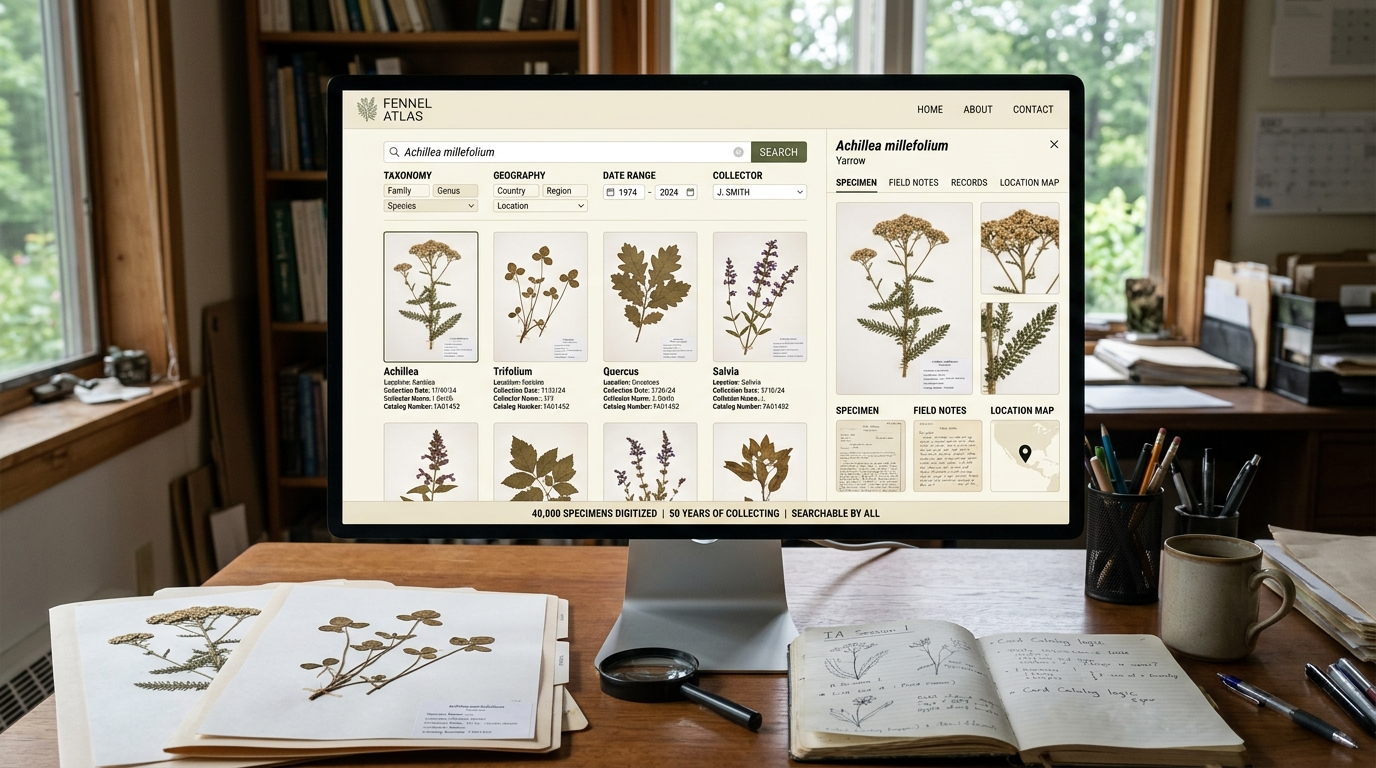
Interface design for a digital herbarium serving 40,000 specimen records to researchers, students, and the deeply curious.
The brief
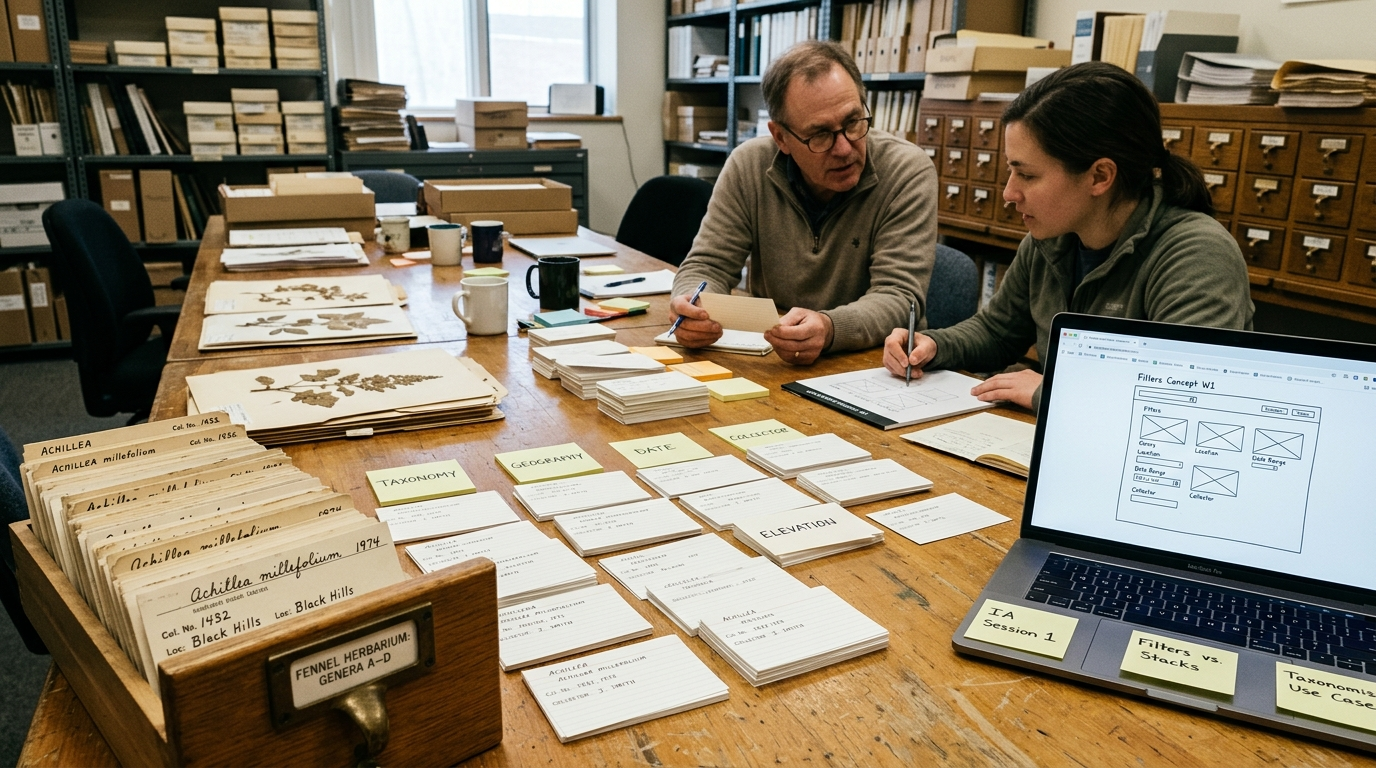
Fennel Atlas digitizes a herbarium collection built over fifty years — 40,000 pressed specimens, field notes, and collection records, previously accessible only by appointment with a card catalog. The research team could build the database. They needed someone to make it usable by three very different people: a taxonomist who lives in it, a student who visits once, and a naturalist browsing on a phone in the field.
What we did
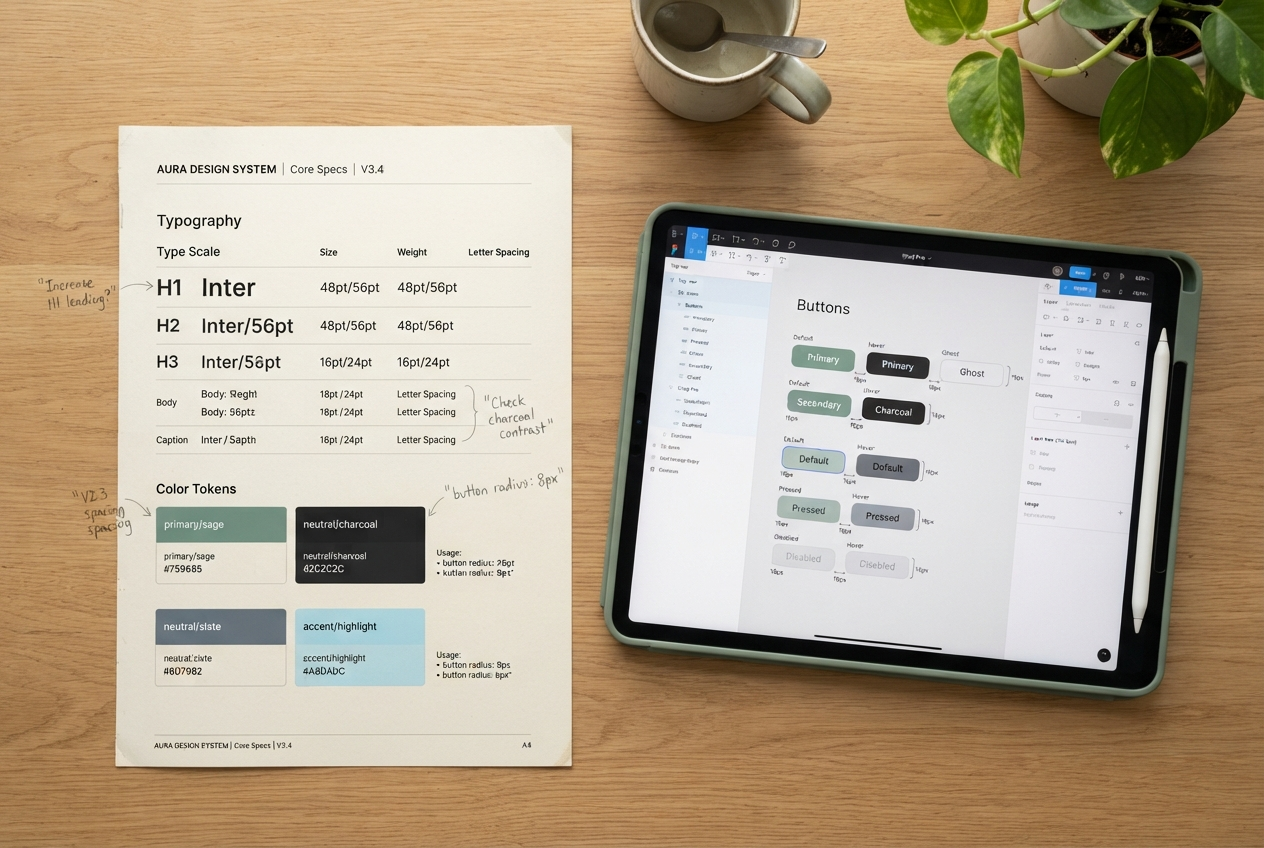
We designed for long sessions. The reading palette is sage and cream — low glare, warm enough to sit with for hours — and the type scale favors legibility over drama. Specimen pages lead with the scan at full resolution, with collection data layered beside it rather than below it; the taxonomist’s most-requested feature was seeing the label and the plant at the same time.
Search respects the card catalog’s logic while adding what paper never could: filter by collector, decade, watershed. A design system of 60-odd components keeps the platform consistent as the team ships new record types.
The outcome
Fennel Atlas opened to the public in spring and crossed 100,000 specimen views in its first quarter — more traffic in three months than the physical collection saw in a decade. Field biologists report using it on phones at the trailhead, which was the design’s quiet moonshot. The card catalog, retired but not discarded, now sits in the archive room as a sculpture.
The Process